
The Double Meaning of Security
The Spy Who Came in from the ColdThis thread traces how security is invoked to justify secrecy, surveillance, and violence while exposing how little safety those systems actually provide.
increasing Bearing strength in each event
 decreasing
Bearing strength in each eventdecreasingSecurity at the Checkpoint
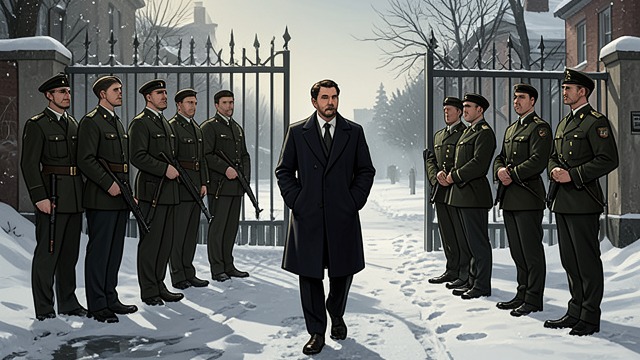
Safety Under Guard
A border watched
Police and sentries observe every movement at the crossing, while rules restrict when western officers may fire. Security depends on procedures that leave a fugitive exposed.
Protection withheld
The guards can watch Karl’s danger but cannot intervene until he reaches the boundary. The language of security masks the helplessness built into the border’s arrangements.
Security Through Compartmentation

Secrets Divided
Controlled circulation
Files and payment records are separated among offices and readers. The arrangement protects the Service from exposure by keeping each worker’s knowledge incomplete.
Risks hidden in ignorance
The same system prevents Leamas from understanding the full operation he serves. Security protects institutions, but not necessarily the agents or civilians drawn into their plans.
Security as Political Accusation
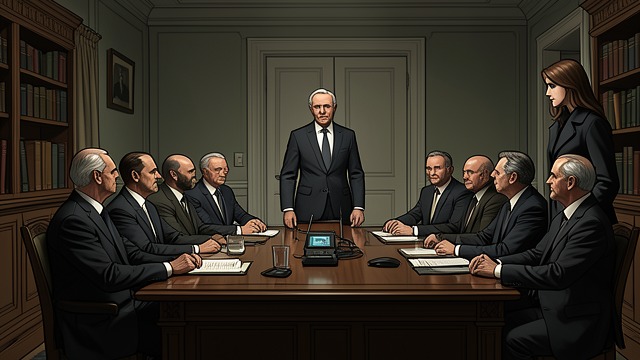
Protecting the State
A charge of sabotage
Mundt and his allies accuse Fiedler of conspiring against the security of the people. The language makes political disagreement appear to be a threat to the whole state.
Power decides the danger
The accusation is directed by the same leadership whose security apparatus Fiedler sought to defend. The term protects authority as much as it protects citizens.
The Prison’s Logic
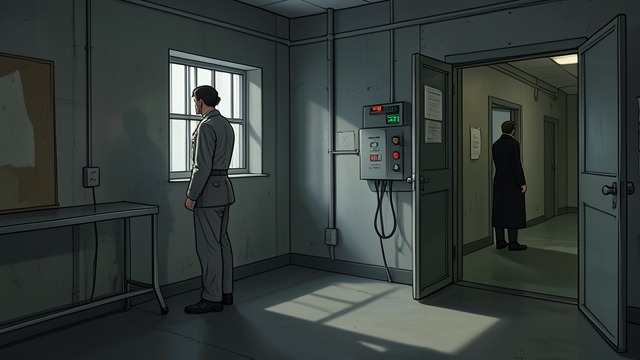
Safety Recast as Confinement
Enemies defined
The prison commissar says that people who resist the state’s direction must be removed. Security becomes a reason to imprison those who insist on the right to err.
A human consequence
Liz learns that both Leamas and Fiedler may be executed. The institution’s promise of collective safety offers no meaningful protection to the individuals it holds.
The Wall’s False Security
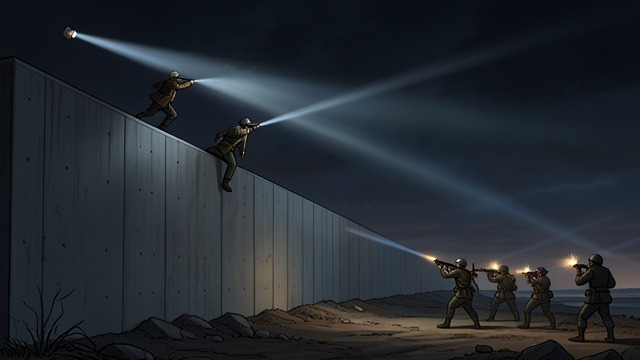
A Border That Cannot Protect
A prepared opening
The Wall’s guards and searchlights are meant to regulate movement, yet an apparent gap is offered to the fugitives. The state’s control seems to make escape possible and safe.
Violence beneath control
The lights converge and the climbers are shot. The border secures political control, not the lives of the people caught inside its rules.
During the opening scene at Checkpoint Charlie
During Leamas’s account of Banking procedures
When Mundt is arrested
During Liz’s detention after the hearing
During the final escape attempt
